
Rankings and systems
How to find an oldschool Silkroad server that suits you
Compare oldschool Silkroad servers by races, job rules, equipment, automation and progression. Turn nostalgia into a practical server shortlist.
Last updated: November 13, 2026
When looking for an oldschool Silkroad server, first describe the experience you miss: familiar character builds, slower progression, trading competition, particular maps or playing in a party with friends. Listings may use oldschool, old school and classic for different combinations of features. Finding the right server means connecting those labels to specific systems you want to play.
This guide does not rank the “best” servers. It helps you compare your expectations with a candidate's documented and testable features. Screenshot listings are examples; open the current page and recent announcements before making your choice.
Write down three parts of Silkroad you want back
You might want to play a Chinese character, join caravans with friends and collect equipment gradually. Another returning player may want European party roles and skills from a different period. Both players can describe their preference as classic without wanting the same server.
Also write down modern conveniences you would welcome, such as a clearer interface, starting assistance or easier item collection. Decide which changes would undermine the experience for you. These notes let you compare consistently instead of accepting every “original” claim or rejecting every added feature on principle.
Use CAP as a starting point
You can begin with the 80 CAP Silkroad server list and examine each candidate's races, short description and full introduction. If you remember a different level limit, compare the 100 CAP or 110 CAP listings too. Do not treat one CAP as a universal definition of oldschool.
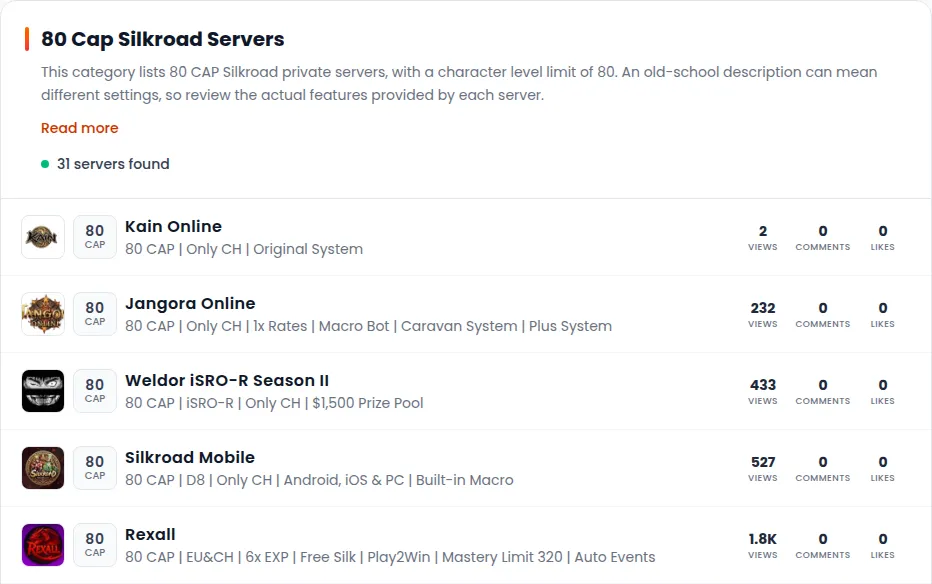
CAP identifies the character level ceiling. Servers with the same ceiling can have different races, skill settings, equipment tiers and custom systems. Check Only CH, EU&CH or Only EU separately. A file or version name by itself also does not establish that every in-game setting remains unchanged.
Translate “classic” into gameplay details
Experience you want | Check the description or rules for |
|---|---|
A familiar character build | Available races, mastery limits and modified skill effects. |
Trading and job competition | Available jobs, trade rules, rewards and event times. |
Older equipment progression | Available equipment, acquisition methods and upgrade limits. |
A familiar world | Open maps, quests and any added regions. |
Party progression | Party rewards, solo options and multicharacter rules. |
A lasting character goal | Published plans for seasons, resets and future CAP increases. |
You do not need to memorize every historical version of the game. You need to understand how your preferred system works on this particular server. An old video or previous-season announcement may describe different rules, so compare its date and season with the current information.
Read macro, bot and convenience features separately
The oldschool label does not define an automation policy. Read the current rules for built-in macros, external bots and multiple characters. Permission on another server does not transfer to this one. Check the policy before relying on any particular tool or setup.
If starting equipment, automatic equipment upgrades or accelerated quests are offered, find out what they change. You may welcome them, but they can alter the gradual progression you hoped to revisit. Record that trade-off. A classic-looking interface and a classic-style economy are different expectations and need separate checks.
Match progression speed to your available time
Consider equipment sources and required activities alongside EXP and SP rates. Leveling may be fast while collecting your target set takes much longer. Conversely, a low advertised EXP rate may be combined with starting assistance or custom quests that change the pace.
If party play matters, discuss your group's schedule and intended character roles. Check IP, PC, guild and union limits. An online counter alone cannot tell you whether a suitable party will be available at your playing time. Look for current community discussions and announcements about the activities you want to join.
Use a short trial to check your expectations
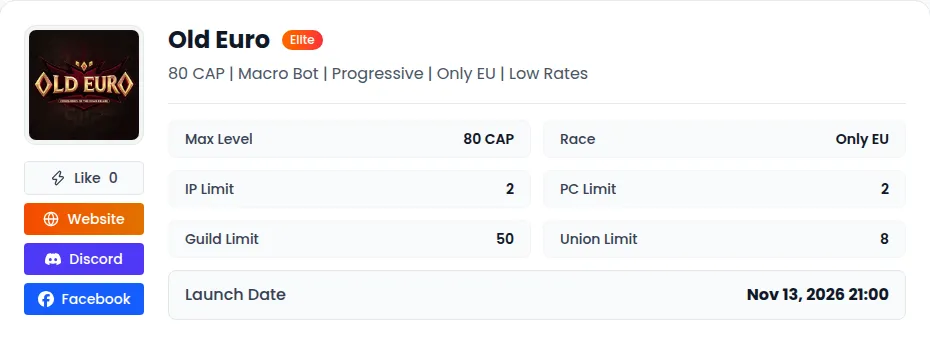
The Old Euro example shows 80 CAP alongside Only EU. It illustrates why CAP and races need separate checks; it does not independently verify that classic mechanics are preserved.
Before downloading, use the website and community links on the SRO.GG listing to find current information. Examine how the shop's available products fit advertising terms such as original or Play2Win. A visibility badge does not certify that a server accurately reproduces a particular era.
If you can try the server, inspect a starting quest, a skill-development step and the gameplay loop you care about. Note changes to gameplay as well as visual similarities. During a beta, ask whether characters carry over and whether rates will change at launch. If two candidates remain, return to your three main requirements and choose the one whose published rules fit them more clearly.
Common questions about oldschool servers
Is every 80 CAP server oldschool?
80 CAP describes a level ceiling. Races, equipment, skill settings and custom systems can vary between servers at that ceiling.
Does oldschool mean no bots?
The label does not establish bot or macro rules. Read the current automation policy separately.
Does “long term” mean a server will never close?
It is an intention or an advertising claim, not a guarantee of future operation. Review published season plans, recent announcements and the operator's ongoing communication.