
Rankings and systems
How to choose a progression-focused Silkroad server
Compare emek and low-rate Silkroad servers by progression, equipment, purchases, party needs and your available time, using practical questions.
Last updated: November 13, 2026
When choosing a progression-focused Silkroad private server, check how the time you spend becomes character progress. This style may suit you if you enjoy leveling, collecting equipment and developing within an economy. Turkish listings often call it emek, sometimes translated as a grind-focused or slower-progression server. Treat that word as a starting point and compare the published rules with your available playing time.
This guide gives you a common set of questions for comparing candidates. Servers in the screenshots illustrate the interface; they are not endorsed or ranked here. Listings, rules and displayed numbers can change.
Decide what kind of progression you enjoy
Choose the activity that would keep you playing: developing a character, searching for rare equipment, trading, joining group events or preparing a PvP build. If an activity you dislike is the only source of essential gear, a low experience rate will not make that server a good match.
Write down how many evenings you can play each week and the usual length of a session. Pick two requirements, such as flexible event times or the ability to collect equipment with your friends. Revisit them when an attractive announcement catches your attention. The useful question is whether the effort feels worthwhile and understandable, rather than simply how long reaching a milestone takes.
Build a shortlist from the CAP listings
Start with the level limit you want. Open the 110 CAP Silkroad server list or the 80 CAP list, for example. CAP describes the character level ceiling; it does not establish progression difficulty, available races or equipment rules.
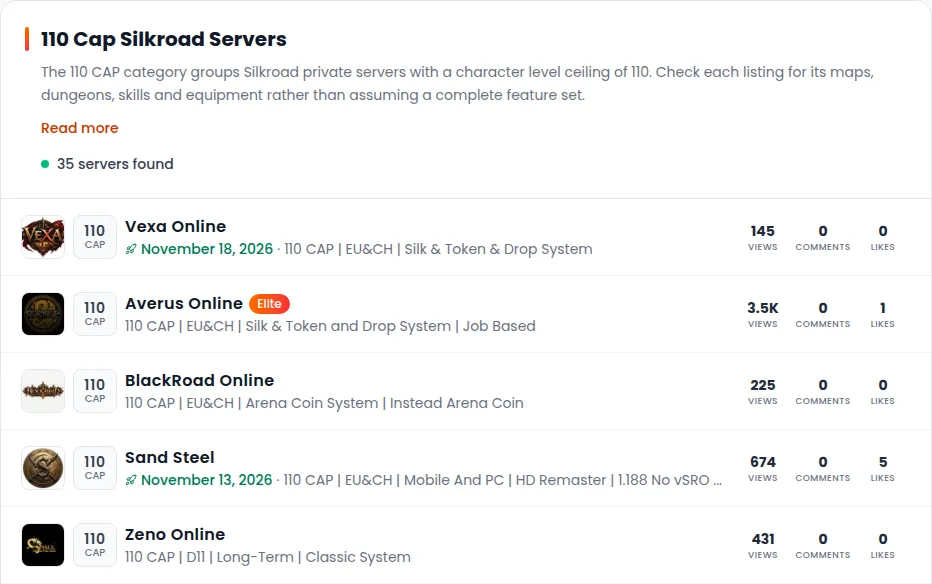
Save the names and links of three candidates. Open each full description even if the short description already says emek, low rate or hard rate. SRO.GG search matches names and short descriptions; matching a term does not independently verify the advertised play style. If important details are missing, follow the listing's website and community links to read the server's current rules.
Assess EXP, SP and item acquisition separately
Record experience rates, skill-point gains and equipment acquisition in separate fields. A single “10x” claim needs an explanation of what it affects. Custom quest rewards, starting equipment, party bonuses and level-dependent rates may all change the actual progression time. Identical advertised multipliers on two servers do not establish identical journeys.
Find out what happens after reaching the level cap. Check the activity needed for your first equipment upgrade, whether you can begin alone and when it is available. If the operator estimates a completion time, ask what setup that estimate assumes. An established party's experience may be very different from a new solo character's experience.
Compare equipment and economy with specific questions
Check | Look for |
|---|---|
Equipment source | Drops, quests, coins or events, with entry requirements. |
Trading | Whether rewards can be sold, transferred or are bound to a character. |
Daily limits | Entry allowances, reward limits and the effect of missing a day. |
Upgrades | The plus limit, required materials and consequences of failure. |
Newcomer access | A documented starting route for joining an established population. |
One candidate might award a key resource only at a time you cannot attend, while another provides several opportunities. The second may fit your schedule better. This comparison measures personal suitability; it does not establish an overall quality ranking.
Check how purchases affect progress
When a listing advertises free silk or Play2Win, examine which products are available and what limits apply. Cosmetics, progression boosts, direct equipment and random rewards can affect development differently. If something can be earned through gameplay, its requirements still matter.
Decide your acceptable spending limit before starting. If the current shop descriptions contradict the announcement, pause your choice and ask for clarification. A visibility package or prominent position on SRO.GG does not demonstrate that the in-game economy is balanced.
Match party needs, connection limits and automation rules
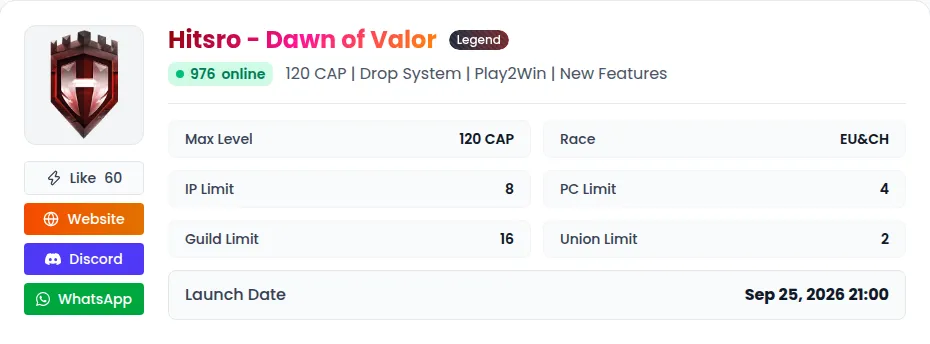
The Hitsro information card illustrates where these fields appear; the screenshot does not identify that server as an emek server.
Compare available races, IP/PC limits and guild capacity with your group's plans. Read external-bot, built-in-macro and manual-play rules separately. The emek label does not tell you whether automation is allowed. Confirm permitted tools in the server's current rules instead of assuming permission from another project's policy.
If a beta is available, try a short session: inspect the starting path, one meaningful progression step and an event you want to join. Ask whether beta rates will change at launch. Compare your notes using the same criteria for every candidate. Keep unresolved requirements marked as unknown rather than treating missing information as a positive result.
Common questions about progression-focused servers
Does an emek server have to use 1x rates?
Do not use one multiplier as a universal definition. Quests, equipment, rewards and automation rules also shape the effort required.
Does emek mean oldschool?
Emek describes the effort involved in progressing; oldschool describes an intended classic experience. A server may advertise both, but each claim needs its own checks.
Can someone with limited time enjoy this style?
That depends on personal goals and the server's schedule. Daily requirements, solo progression and party needs may matter more to your choice than a low EXP rate alone.